Monday, August 26, 2013
Carnap v. Popper
Remember that Carnap thought that a sentence can only be a meaningful statement if we know the conditions for verifiability for that sentence. In other words, a sentence is only meaningful if it can be verified. Popper introduces an alternative standard for the statements of science. As he notes that no verification can be permanent, he shifts attention from verifiabilility to falsifiability. In Popper's terms, statements are only scientific if they can be falisified. Any single statement from an existing system of scientific facts can be used to falsify an entire system. A statement need not be falsified in order to be scientific. But there must be the possibility that the statement can be falsified if it is a scientific statement.

Popper Background


Background on Heidegger

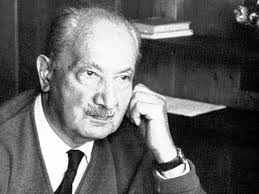 Heidegger was born in Meßkirch, Germany. He was a student of Edmund Husserl. Under the Nazi regime, Heidegger rose to prominence as Rector of the University of Freiburg. Many agree that Heidegger himself was not an anti-Semite but an opportunist and a coward. He was de-Nazified, but in his last interview, he famously fails to denounce his Nazi Past. Some Heidegger scholars see his

works in his later years as devoted to the kind of values that would directly oppose the National Socialist Party. Either way, Heidegger is a controversial man with controversial philosophy. The influence of his thought can be found here in the U.S. and abroad in places like Japan and Iran. Heidegger is internationally known and respected in spite of his past.
To what extent should the personal history of an individual color our perception of his or her philosophy?
Thursday, August 22, 2013
Heidegger-style Discourse in Hip Hop
In this track, Yolandi Visser of Die Antwoord appropriates certain vocabulary and assigns them her own meaning. If metaphysics is a poor substitute for art (as Carnap asserts), then maybe this hip hop crew from South Africa is 'the answer' to some of life's important questions. Warning: Explicit Content.
Wednesday, August 21, 2013
The Truth is Here
Here is a track called "The Truth is Here" from Brother Ali, just in case you were wondering where it's been.
Tuesday, August 20, 2013
What is Meaningless?
In
a definite language, a word designates a concept. We get m'less
words when a word loses its old m and does not acquire a new one.
The meaning of a word is made up of two things: a fixed syntax for
that word and fixed conditions for verifying the truth or the
falsehood of the elementary sentence for that word. The elementary
sentence is the sentence that fixes the syntax for a word, or
specifies how that word is to be used in a sentence. For example, "X
is a stone" is the elementary sentence for stone, as it
indicates that nouns are stones. That 'stone' is the category of
word that applies to nouns. Once we have the elementary sentence, we
should be able to determine what other sentences are deducible from
that sentence.
Some sentences of metaphysics are meaningless because they have meaningless words in them. Others are meaningless because they are formed either counter-syntactically or because they contain type confusion or type errors. Contrast "I has and cheeseburger" with "Kobe is a right angle". In the first sentence, words are arranged in a grammatically incorrect way. The sentence is meaningless because it is counter-syntactically formed. In the second sentence, the words are not in violation of the official rules of grammar, but the kind of predicate applied to Kobe is the wrong kind of predicate. Carnap thinks that in addition to word categories like predicate, copula, etc., we need further sub-categories. For example, there are some predicates that are appropriate to apply to humans (e.g., a man, a basketball player, a rapist) and others that are not (a right angle, a prime number, a breath of fresh air).
Perhaps uses of the second kind can have metaphorical associations, but that's just not scientific meaning, according to Carnap
Existential Quantifiers and Existence
In order to understand what Carnap says
about existence not being a quality but a logical form, you need to
know a little bit of predicate logic. In predicate logic, the
sentence "Kobe exists" would be translated into "Ǝx
(Kobe)". The content of the statement is within the
parentheses. The sign combination of " Ǝx"
is a logical form (sometimes called logical constant) that tells us
the quantity of what is inside the parentheses. Specifically, the
existential quantifier tells us that there exists some thing to which
the signs in the parentheses refers.
The point is that when we use a logical language (predicate logic), <existence> is expressed not as a predicate itself, but as a form of a predicate (namely, that it exists).
Subscribe to:
Posts (Atom)