Check out these links to my other blog where I cover Gettier in detail:
http://philosophywithlouise.blogspot.com/#uds-search-results
Thursday, September 5, 2013

Quine
Quine's polemic against the 'dogmas of empiricism' centers around the issue of what exactly it means to say that a statement is analytic. Certain statements, like tautologies, are tautologies because the signs used are the same. E.g, "All unmarried men are unmarried." But a statement like "All bachelors are unmarried" is supposed to be analytic even though the signs differ. So how is it that the statement is analytic? Some appeal to the notion of synonymity. Since 'bachelor' and 'unmarried man' are synonyms, then the sentence is analytic. But how can we define synonymity without an appeal to a definition of analyticity? If we say that two words are synonymous because they can be exchanged in every case with the same truth value preserved, this does not work for sentences like ""Bachelor"" has less than ten letters" and ""An unmarried man" has less than ten letters. In order to know what really makes words synonymous, we need to first define analyticity.
Quine offers a holistic notion of language, according to which no statements are analytic. All statements are subject to revision based on new empirical knowledge. Some statements will be more integrated into systems of knowledge, but even those that are very foundational will be subject to revision.
Quine offers a holistic notion of language, according to which no statements are analytic. All statements are subject to revision based on new empirical knowledge. Some statements will be more integrated into systems of knowledge, but even those that are very foundational will be subject to revision.
Externalism and Extended Mind
Putnam points out that if we imagine Twin Earth, where 'water' is made up of XYZ molecules instead of H20 molecules, then the meaning of the word 'water' is different there than it is here. Burge notes that if 'arthritis' meant inflammation in joints and other tissues in Twin Earth, then the belief "I have arthritis in my thigh" is true there even though it is false here. Both these examples seem to indicate that the meanings of our words are not determined by what is going on inside our own minds.
Chalmers and Clark propose a theory that even your own cognition is not happening entirely in your own mind. If there is something external to you that aids in a cognitive process, such as a calculator or a notebook, and if that thing is reliably coupled to you so that you can use it normally, then that external thing is part of your cognitive process and hence part of your mind.
Chalmers and Clark propose a theory that even your own cognition is not happening entirely in your own mind. If there is something external to you that aids in a cognitive process, such as a calculator or a notebook, and if that thing is reliably coupled to you so that you can use it normally, then that external thing is part of your cognitive process and hence part of your mind.
Millikan and Langer
 Millikan's theory of meaning (or theory
of intentionality) is the theory that things like the dance of a
honeybee or the splash of a beaver's tail have meaning. The signs
(the dance or the splash) have a fixed function that they serve.
These signs are consumed by other bees and other beavers. The axis
on which a bee dances corresponds to the direction in which nectar
lies. The tempo at which a bee dances corresponds to the distance of
the nectar. The bee can vary the dance to convey different meanings
to other bees. To speak anthropomorphically (and hence
metaphorically), the bee is telling the other bees where the nectar
is and to go get it. A beaver splashing its tail tells other beavers
that danger is coming and to take cover.
Langer provides a theory of 'significance' for art. She says that art is a symbol for human feelings. Symbols differ from signs insofar as symbols convey a conception of something, or an idea. Signs merely refer to an object. Art forms are similar to languages because they have articulated forms of expression. Art forms differ from languages because they have no fixed referents for their symbols.
Wednesday, August 28, 2013
Finally Some Americans


 Edmund Gettier (left) was born in Baltimore, Maryland. William Van Orman Quine (right) was born in Akron, Ohio. Quine was able to travel to Europe while studying and meet members of the Vienna Circle (including Carnap) and Polish logicians (who were known for groundbreaking work at the time). Gettier is best known for the short paper we read in class, which was put together after Gettier was encouraged to write something up in order to satisfy the administration at his school. Both are known for their influence in philosophy of language and epistemology.
Sartre Context
Like Descartes, Sarte is a dualist. He thinks there are only two kinds of substances that exist: Being and Nothingness. Being includes physical bodies in the world, including our own bodies. Nothingness is our consciousness. Nothingness determines itself and is radically free. Being is externally determined. As humans, we are both Being and Nothingness. Our consciousness is free even if our physical existence is determined by external forces. One of the results of our dual nature is bad faith. Bad faith means that you always tend to get wrapped up either in your Being or your Nothingness. If you think you have more freedom than you actually do, you're lost in your transcendence. If you think you have less freedom than you actually do, you're lost in your facticity. Bad faith is a basic structure for humanity. We cannot escape it.
Sartre recognizes that many people associate existentialism with despair. Indeed, this is not a necessary consequence of buying into the notion that for humans existence precedes essence (our actions define who we are). Rather, despair just seems to be a common response to the feelings of responsibility that arise when we recognize that we are in control of deciding our own character
Sartre recognizes that many people associate existentialism with despair. Indeed, this is not a necessary consequence of buying into the notion that for humans existence precedes essence (our actions define who we are). Rather, despair just seems to be a common response to the feelings of responsibility that arise when we recognize that we are in control of deciding our own character
Monday, August 26, 2013
Sartre Background


Carnap v. Popper
Remember that Carnap thought that a sentence can only be a meaningful statement if we know the conditions for verifiability for that sentence. In other words, a sentence is only meaningful if it can be verified. Popper introduces an alternative standard for the statements of science. As he notes that no verification can be permanent, he shifts attention from verifiabilility to falsifiability. In Popper's terms, statements are only scientific if they can be falisified. Any single statement from an existing system of scientific facts can be used to falsify an entire system. A statement need not be falsified in order to be scientific. But there must be the possibility that the statement can be falsified if it is a scientific statement.
Popper Background


Background on Heidegger

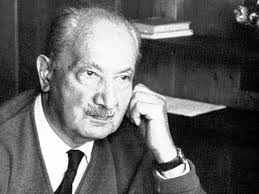 Heidegger was born in Meßkirch, Germany. He was a student of Edmund Husserl. Under the Nazi regime, Heidegger rose to prominence as Rector of the University of Freiburg. Many agree that Heidegger himself was not an anti-Semite but an opportunist and a coward. He was de-Nazified, but in his last interview, he famously fails to denounce his Nazi Past. Some Heidegger scholars see his

works in his later years as devoted to the kind of values that would directly oppose the National Socialist Party. Either way, Heidegger is a controversial man with controversial philosophy. The influence of his thought can be found here in the U.S. and abroad in places like Japan and Iran. Heidegger is internationally known and respected in spite of his past.
To what extent should the personal history of an individual color our perception of his or her philosophy?
Thursday, August 22, 2013
Heidegger-style Discourse in Hip Hop
In this track, Yolandi Visser of Die Antwoord appropriates certain vocabulary and assigns them her own meaning. If metaphysics is a poor substitute for art (as Carnap asserts), then maybe this hip hop crew from South Africa is 'the answer' to some of life's important questions. Warning: Explicit Content.
Wednesday, August 21, 2013
The Truth is Here
Here is a track called "The Truth is Here" from Brother Ali, just in case you were wondering where it's been.
Tuesday, August 20, 2013
What is Meaningless?
In
a definite language, a word designates a concept. We get m'less
words when a word loses its old m and does not acquire a new one.
The meaning of a word is made up of two things: a fixed syntax for
that word and fixed conditions for verifying the truth or the
falsehood of the elementary sentence for that word. The elementary
sentence is the sentence that fixes the syntax for a word, or
specifies how that word is to be used in a sentence. For example, "X
is a stone" is the elementary sentence for stone, as it
indicates that nouns are stones. That 'stone' is the category of
word that applies to nouns. Once we have the elementary sentence, we
should be able to determine what other sentences are deducible from
that sentence.
Some sentences of metaphysics are meaningless because they have meaningless words in them. Others are meaningless because they are formed either counter-syntactically or because they contain type confusion or type errors. Contrast "I has and cheeseburger" with "Kobe is a right angle". In the first sentence, words are arranged in a grammatically incorrect way. The sentence is meaningless because it is counter-syntactically formed. In the second sentence, the words are not in violation of the official rules of grammar, but the kind of predicate applied to Kobe is the wrong kind of predicate. Carnap thinks that in addition to word categories like predicate, copula, etc., we need further sub-categories. For example, there are some predicates that are appropriate to apply to humans (e.g., a man, a basketball player, a rapist) and others that are not (a right angle, a prime number, a breath of fresh air).
Perhaps uses of the second kind can have metaphorical associations, but that's just not scientific meaning, according to Carnap
Existential Quantifiers and Existence
In order to understand what Carnap says
about existence not being a quality but a logical form, you need to
know a little bit of predicate logic. In predicate logic, the
sentence "Kobe exists" would be translated into "Ǝx
(Kobe)". The content of the statement is within the
parentheses. The sign combination of " Ǝx"
is a logical form (sometimes called logical constant) that tells us
the quantity of what is inside the parentheses. Specifically, the
existential quantifier tells us that there exists some thing to which
the signs in the parentheses refers.
The point is that when we use a logical language (predicate logic), <existence> is expressed not as a predicate itself, but as a form of a predicate (namely, that it exists).
Carnap Background

"In science there are no depths; there is surface everywhere."


Thursday, August 15, 2013
Facts vs. Objects
Wittgenstein says that the world is made up of facts (not objects). What does this mean? It might seem particularly confusing, especially since he also says that facts are combinations of objects. The key to understanding this distinction is to remember that the world has a logical structure. An object on its own does not have a structure because it is not related to anything else. But when objects are combined in definite ways (as they are in facts), then the objects are arranged into a logical structure. Objects are in the world insofar as they are organized into facts. Objects don't just exist free-floating in the world. They only exist in the world when combined in definite ways. The world itself has a logical structure that arranges objects into facts.

Wednesday, August 14, 2013
Husserl and an Intro to Phenomenology
The first chapter of Ideas is about the
phenomenological method. In order to help us understand
phenomenological bracketing, he contrasts the standpoint we take when
we perform phenomenology with what he calls the natural standpoint,
or natural attitude. Husserl says that the first outlook we
have on the world is from a natural standpoint. This means that you
are simply aware as the world as there--even without paying any
special attention to it. In fact, this is the 'General Thesis' of the natural standpoint: the world exists, it is continually present to me, and I am a part of it
In this natural standpoint, or natural
attitude, the world is experienced as being full of value. Things
are experienced as good or bad by me. Things are experienced as
useful. People are experienced either as friends or foes. The world
is also experienced as a "W-about-me", meaning that the
world is always experienced relative to my conscious acts. Conscious acts (acts of the Cogito) include describing, comparing, distinguishing, collecting, counting,
presupposing, inferring, theorizing, wanting, willing, and emotional
states and feelings like sadness, happiness, anger, fear and boredom.
Not only do I
experience the world as real and as continually present to me. I
perceive it as available to other subjects. I experience other as
subjects, as units like me, as selves, as egos, as <Ich>s.
Because I immediate perceive the other as a subject, I take them to
be in the same relation to the natural world as I myself am. The world about me
and the world about them are one in the same, even if we have
completely different subjective experiences of it.
Natural sciences
stay within the natural standpoint. Phenomenology, however, attempts to
radically alter the natural standpoint. For methodological purposes, the general thesis of the natural standpoint is subject to radical Cartesian doubt. This doubt is only as a
device of method. This doubt
does not affect the form of Being itself. Doubting the existence of the world does not affect the world The attempt to doubt is not a
denial of Being or of the natural world. Rather, it is a suspension of the thesis.
p.108, "It is
not a transformation of the thesis into an antithesis...we set it as
it were "out of action", we "disconnect it",
"bracket it"." Husserl also calls this methodological
suspension of the natural attitude Epoche.
In the second
chapter of Ideas, Husserl turns his attention away from the method of
bracketing and towards the object of phenomenological inquiry.
Phenomenological reduction (bracketing) means putting the whole world into
brackets. When we do that, what is left over? The world of fact is
disconnected. The world of form, however, is not disconnected. The
world as Eidos, as form, as structure, remains in pure consciousness.
Husserl calls this pure experience, or pure Ich, phenomenological
residuum. Basically, the form of experience is all that is left over
when we abstract away from all actual experience.
When considered in its full concrete context, each experience
has an essence or a content. After performing the phenomenological
reduction, we can grasp the essence of the experience. This is a
task of phenomenology. Even though the experience has been bracketed,
they still share in the essential nature of the original experience.
Both the original experience and my phenomenological reduction of
that experience are about something. Consider this analogy. The sentence "Kobe is tall" is about a living thing in the natural world. The name "Kobe" is directed towards Kobe the person. When I put the name in brackets, then I'm not just talking about the person Kobe. I'm talking about the mode of presentation for that person. But the content of <Kobe> is still directed towards Kobe. <Kobe is tall> is still about Kobe, even if I suspend all belief in the existence of the natural world for methodological purposes
Be warned, however, not all experiences have this characteristic. Only experiences that are actually conscious experiences of some thing have this characteristic. Such experiences are called intentional experiences. Intentional experiences are just experiences that are about something. In other words, these experiences are intentionally related to some object. In yet other words, these experiences have intentionality because they are experiences of something. My experience of watching Kobe on TV is an intentional experience because it is an experience about Kobe. But if I hallucinate that Kobe is in the room with me, then my experience is not actually about something real. The hallucination is not an intentional experien
Be warned, however, not all experiences have this characteristic. Only experiences that are actually conscious experiences of some thing have this characteristic. Such experiences are called intentional experiences. Intentional experiences are just experiences that are about something. In other words, these experiences are intentionally related to some object. In yet other words, these experiences have intentionality because they are experiences of something. My experience of watching Kobe on TV is an intentional experience because it is an experience about Kobe. But if I hallucinate that Kobe is in the room with me, then my experience is not actually about something real. The hallucination is not an intentional experien

Sunday, August 11, 2013
Rilke and Wittgenstein
Wittgenstein wrote a book about a picture (Bild) theory of meaning. Rilke, a poet who Wittgenstein financially supported, wrote a poetry book called the Book of Pictures (Buch der Bilder). The poem below is my translation of the first poem of the book, called Eingang. Can you identify themes from Tractatus in the poem below?
"Entrance" from Buch der
Bilder
Who you also would be: in the evening
steps out
out of your room, where you know
everything;
as the last one before the distance
lies your house:
who you also would be,
With your eyes, which seldom wearily
free themselves from the necessary
threshold,
you absolutely slowly heave a black
tree
and set it up against the heavens:
small and alone.
And you have made the world. And she
is big
and like a word that yet ripens in
silence.
And like your will grasping its own
sense,
they sweetly let your eyes go...
Subscribe to:
Posts (Atom)